
Hydrilla Control Methods on Lake Austin, Compared
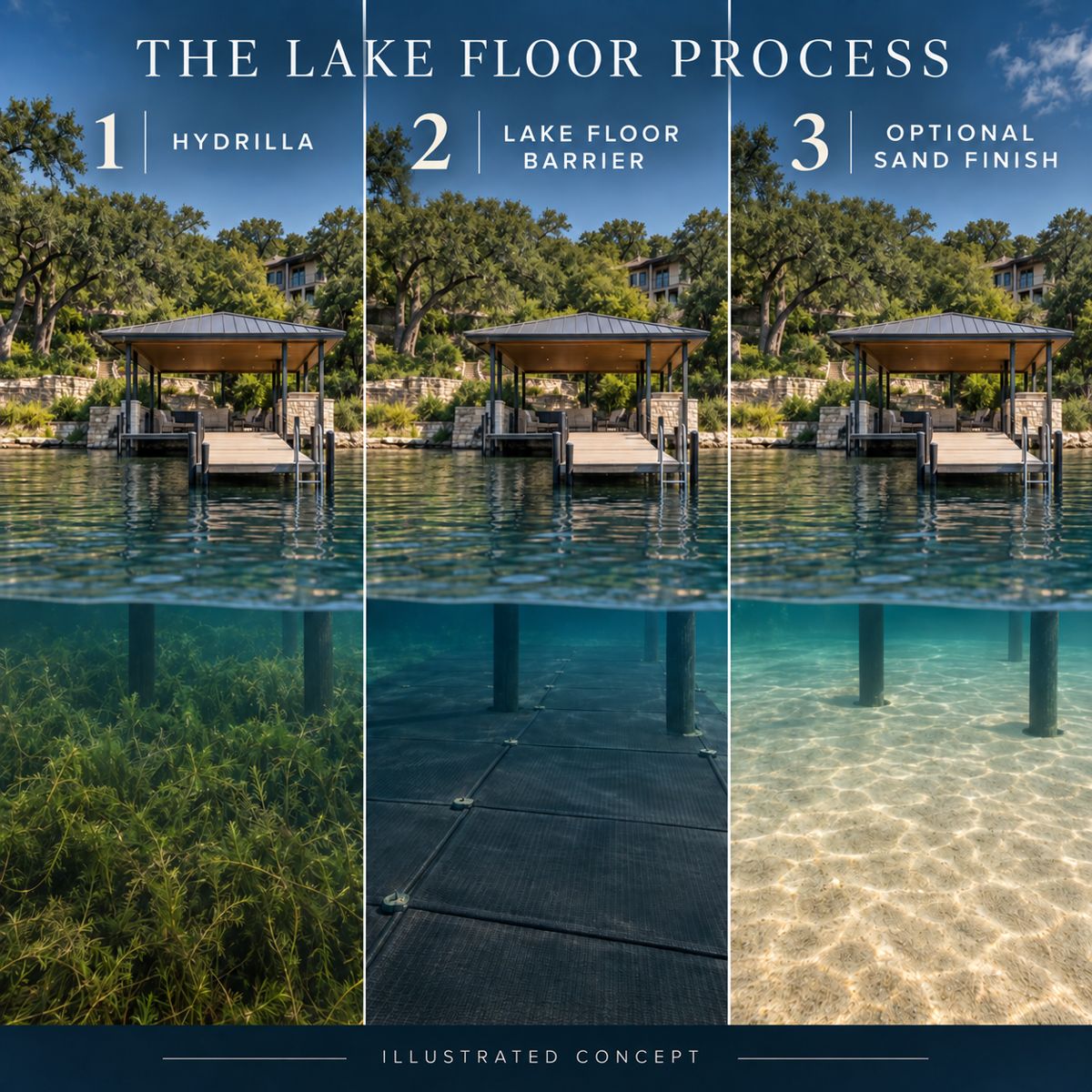
There are six common ways to deal with hydrilla. On Lake Austin, only some of them are allowed, and only some of them work at the scale of one waterfront. Here's how they compare.
| Method | Allowed on Lake Austin? | Scale | How long it lasts |
|---|---|---|---|
| Hand-cutting / raking | Yes, by a permitted contractor | Your shoreline | Weeks in summer |
| Mechanical harvesting | Limited | Open water | Weeks; City says not feasible lake-wide |
| Grass carp | City program only | Whole lake | Slow; months to years |
| Lake drawdown | LCRA decision | Whole lake | Roots survive; can bounce back |
| Herbicides | No (drinking-water supply) | — | — |
| Lake floor barrier | Yes, with TPWD approval | Your dock, slip or swim area | Across seasons, with periodic cleaning |
Hand-cutting and raking
A diver or crew cuts hydrilla by hand and pulls it out, ideally bagging every fragment. It's chemical-free and gives instant results, which is why it's popular. The catch is that roots and tubers stay in the bottom, so in peak season it grows back in weeks. It works best as a one-time cleanup or as the first step before a barrier.
Mechanical harvesting
Boat-mounted harvesters cut and collect hydrilla in open water. The City of Austin says mechanical removal isn't feasible lake-wide because of how fast hydrilla regrows, and harvesters can't get in close around docks and lifts.
Grass carp
Sterile grass carp eat hydrilla and are the City's main long-term tool. They work slowly and across the whole lake, not on any one waterfront. Too many carp can wipe out native plants too, which happened after the 2013 outbreak, so stocking is managed carefully by the City and TPWD. Homeowners can't stock carp in Lake Austin themselves.
Lake drawdowns
Lowering the lake exposes shallow hydrilla to air. LCRA no longer allows winter drawdowns because of hydroelectric needs, spring lowering harms spawning fish, and the City notes hydrilla's roots survive drawdowns. The drawdown planned for fall 2026 has been cancelled.
Herbicides
Not an option on Lake Austin. The lake supplies the City's drinking-water treatment plants and is densely lined with homes, so herbicides aren't used.
Lake floor (bottom) barriers
A barrier covers the lake bottom in a defined area, blocking light and the rooting surface. It's chemical-free, works right around docks and lifts, and keeps the zone clear across seasons with periodic cleaning. It's the only option here built to keep one specific waterfront clear long-term. Read the full barrier guide →
The bottom line
For the lake as a whole, the City's carp program is the long game. For your dock, slip and swim area, the practical choice is between cutting on a schedule and a barrier that keeps it clear. Many owners do both: cut once to clear it, then cover it.
Free on-site assessment. Chemical-free. TPWD paperwork handled.