
Hydrilla & lake weed control on Lake Travis
Lake Austin is our home water, but we take Lake Travis projects on request. Unlike Lake Austin, Lake Travis rises and falls a lot, so every Travis project starts with a careful look at water level and site conditions.
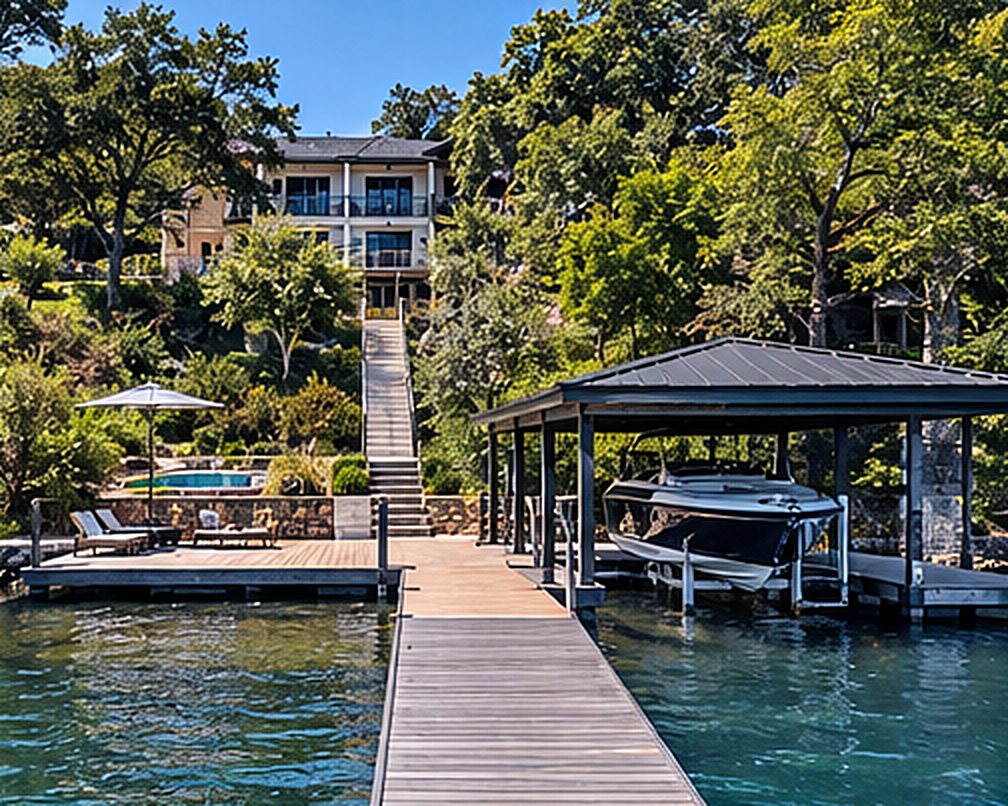
What we see around Lake Travis.
Changing water levels
Lake Travis levels can swing widely. Barrier layout and anchoring depend on where the water is, and where it's likely to go.
Floating docks
Many Travis docks float and move with the lake. We'll look at how your dock sits before recommending coverage.
Case by case
Some Travis sites are a great fit and some aren't. You'll get a straight answer during the assessment.
Clear it once. Keep it clear.
We clear the hydrilla in your zone, haul the fragments away, and cover the lake floor with a barrier so it can't grow back. Add the sand finish for a soft swim-area floor.
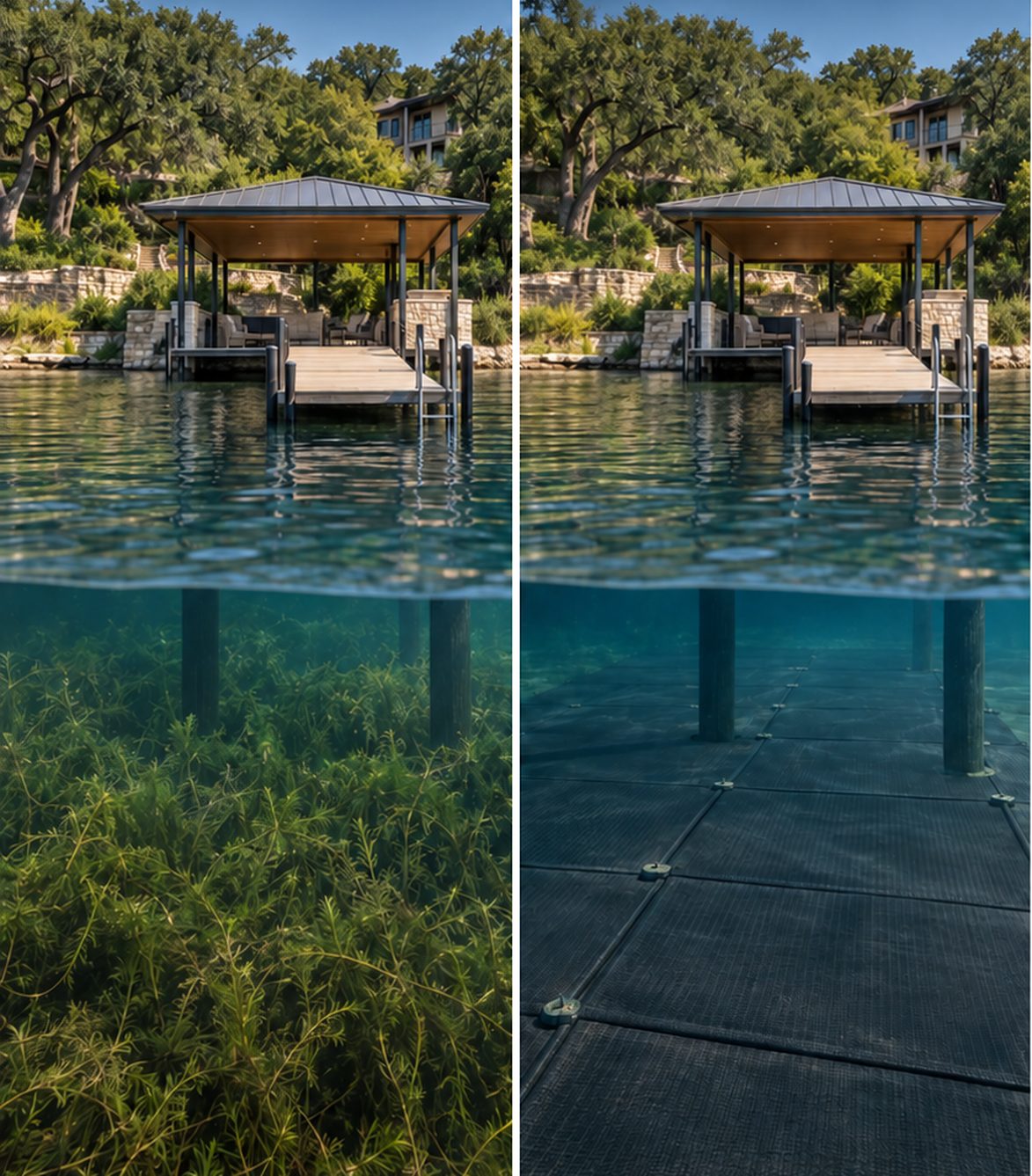 BeforeAfter
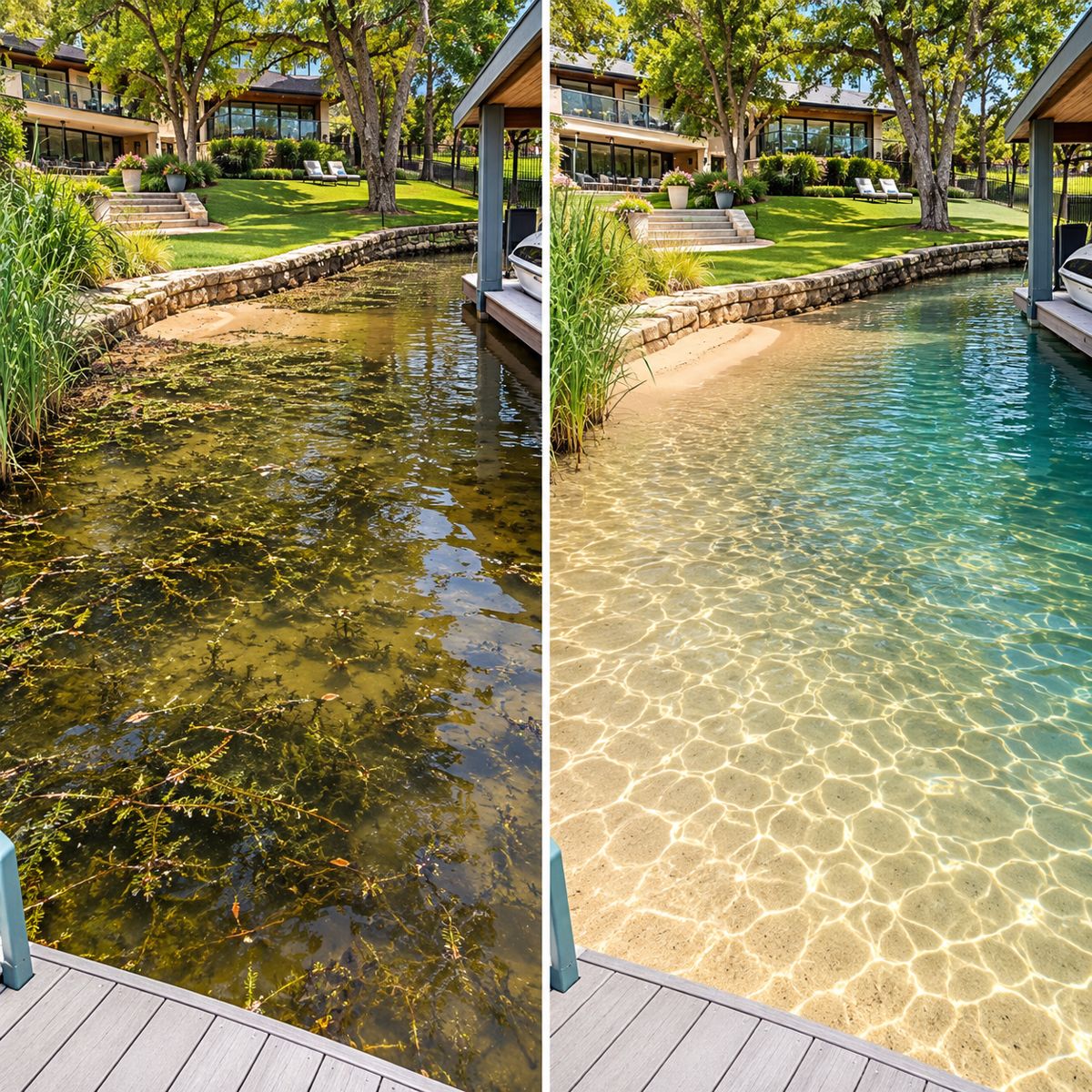 BeforeAfter
Lake Travis hydrilla questions.
Do you do hydrilla control on Lake Travis?
On request, depending on water level and site conditions. Lake Austin is our primary service area.
Why is Lake Travis different from Lake Austin?
Lake Austin stays at a nearly constant level, while Lake Travis rises and falls with rainfall and releases. That changes where plants grow and how a barrier needs to be placed.
Do I need a permit to control hydrilla on Lake Austin?
Yes. Removing or controlling hydrilla in Texas public waters, including installing bottom barriers, requires Texas Parks and Wildlife Department approval. Lake Floor Austin prepares and files the paperwork as part of every project. See our permit guide.
How much does hydrilla control cost on Lake Austin?
Pricing depends on square footage, water depth, access and finish. Installs start at 192 sq. ft. and scale up to any size. Every quote follows a free on-site waterfront assessment. See packages.