
Do You Need a Permit to Remove Hydrilla in Texas?
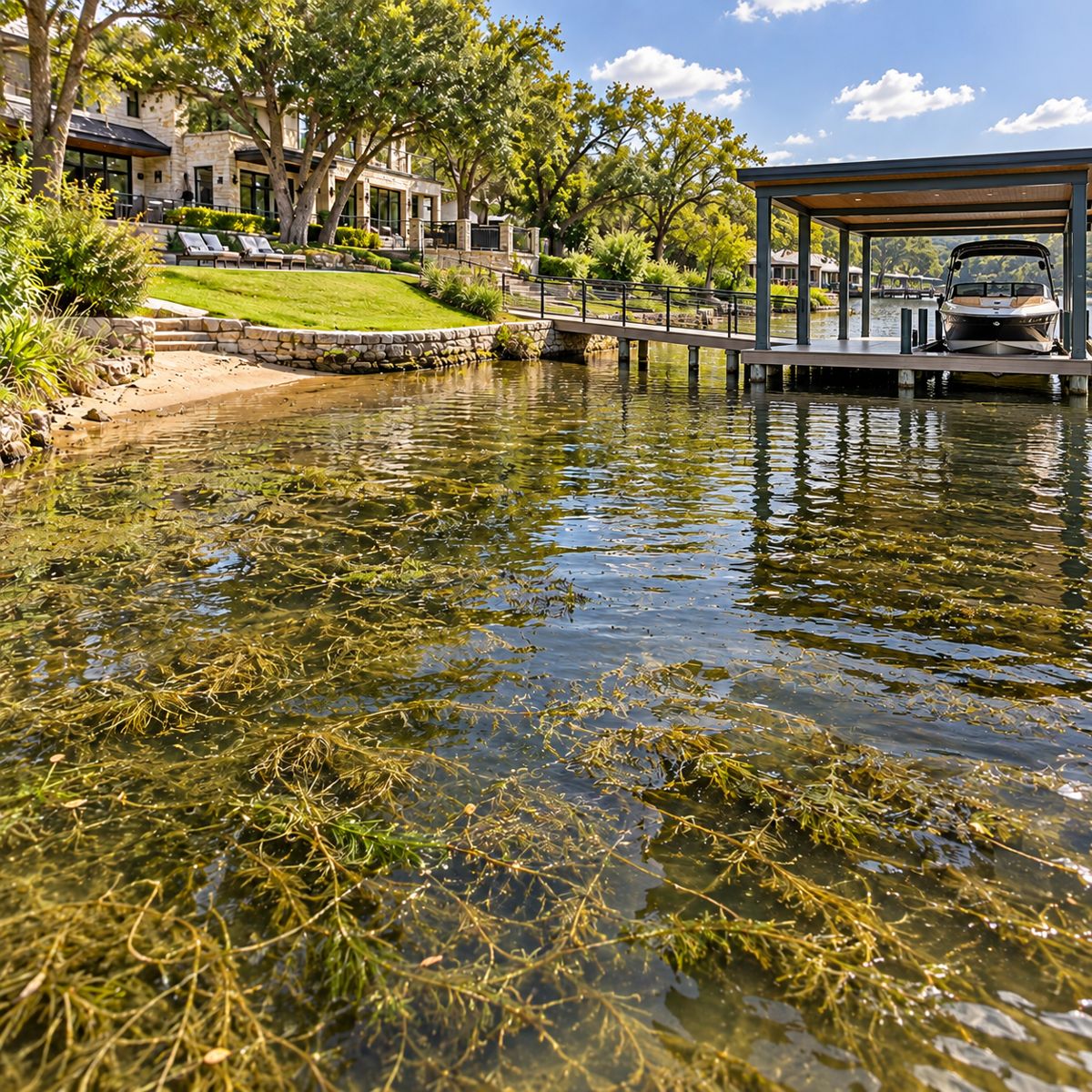
Short answer: yes, if you're working in a public lake like Lake Austin. Hydrilla is a prohibited exotic species in Texas, and removing or controlling aquatic vegetation in public waters needs Texas Parks and Wildlife Department approval. Here's what that means in practice.
Public water vs. private ponds
Lake Austin is public water. Anyone treating, physically removing, or using biological controls on vegetation in public water needs TPWD approval, through what TPWD calls a nuisance aquatic vegetation treatment proposal. Enclosed private ponds are handled differently. Lake Austin, Lake Travis and the other Highland Lakes are all public water.
What gets permitted
- Physical removal: hand-cutting, raking, pulling, harvesting
- Bottom barriers: TPWD's application lists "mechanical / benthic barrier" as a treatment method
- Biological control: such as stocking grass carp, which on Lake Austin is handled by the City
- Chemical treatment: not used on Lake Austin, which supplies the City's drinking-water plants
Because hydrilla is a prohibited exotic species, TPWD's application for removal is on its exotic-species form (PWD 1029), along with a treatment proposal that describes the area, method and plan.
Who files it: you or your contractor?
The City of Austin's guidance is to hire permitted contractors for clearing around docks. A good contractor handles the application as part of the job and can show you what's been approved for your site. At Lake Floor Austin, TPWD paperwork is included in every project.
Why it matters who you hire
- Unpermitted removal from public water can bring fines.
- Permitting forces a real plan: area, method, disposal. That's how the job should be done anyway.
- Fragments must be collected and disposed of properly, or they spread down the shoreline.
What about raking my own shoreline?
The City asks that anything you manually remove or rake from your shoreline be properly disposed of or composted, and it recommends permitted contractors for clearing around docks. If you're planning anything beyond picking up what washes ashore, check with TPWD first.
This guide is general information, not legal advice. Requirements can change, so check with Texas Parks and Wildlife for your specific situation.
Free on-site assessment. Chemical-free. TPWD paperwork handled.