
Lake Austin Hydrilla in 2026: What Waterfront Owners Need to Know
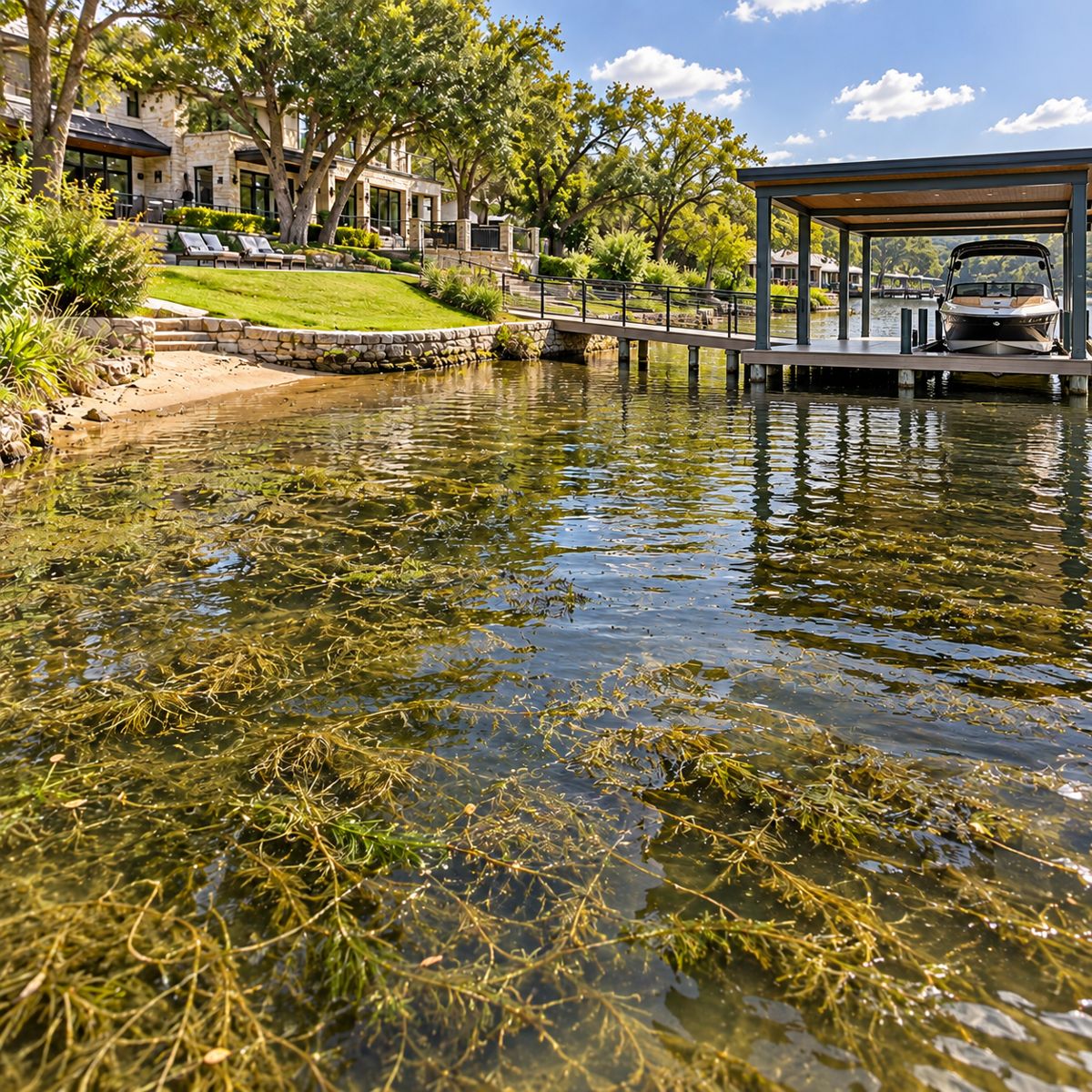
Hydrilla is back on Lake Austin in a big way. If your dock, slip or swim area feels more choked than it has in years, you're not imagining it. Here's where things stand this year and what you can do about it at your own waterfront.
How much hydrilla is on Lake Austin right now?
According to the City of Austin, a Texas Parks and Wildlife survey in June 2026 found about 575 acres of hydrilla and 75 acres of Eurasian watermilfoil on Lake Austin. Local reporting describes hydrilla acreage as near an all-time high. For context, the last major outbreak peaked at more than 600 acres in early 2013.
Why is it so bad again?
Hydrilla thrives when the water is warm, clear and slow-moving. Drought means lower inflows and stiller water, which is exactly what set off the early-2010s outbreak and what has fueled the current one. Because Lake Austin is held at a nearly constant level, the shallow shelves along the shoreline stay in the sunlight year-round, which is where hydrilla roots and spreads.
What is the City doing?
- Grass carp. The City's main long-term tool is sterile grass carp, which eat hydrilla. About 2,790 more carp were stocked in early May 2026. The City says not to expect immediate reductions. Carp work slowly, lake-wide, and not on any one owner's schedule.
- No herbicides. Herbicides aren't used on Lake Austin because the lake supplies the City's drinking-water treatment plants and is lined with homes.
- Drawdown cancelled. A lake lowering had been planned for October 12 through November 30, 2026, but the City now lists it as cancelled. Even when drawdowns happen, hydrilla's root systems survive and the plant can bounce back quickly.
What that means for your waterfront
Lake-wide programs are about the health of the whole reservoir, not the 20 feet off your dock. The City's own guidance is for owners to hire permitted contractors to clear hydrilla around docks, and to dispose of anything raked or pulled from the shoreline properly.
That leaves two real options for a specific dock or swim area: cut or pull it on a schedule and accept that it grows back, or cover the lake floor with a barrier so it can't grow back in that zone.
What you can do this season
- Decide which area matters most. Most owners start with the slip and a swim area or launch.
- Get a site assessment. Depth, bottom type and dock layout decide what will work. Ours is free.
- Make sure the work is permitted. See do you need a permit to remove hydrilla?
- Help the lake. Clean and dry boats and gear, go easy on lawn fertilizer near the water, and keep native plants along the shoreline.
Last updated September 27, 2026. Figures from the City of Austin and Texas Parks and Wildlife; check the sources below for the latest.
Free on-site assessment. Chemical-free. TPWD paperwork handled.