
Why Hydrilla Keeps Coming Back to Your Dock
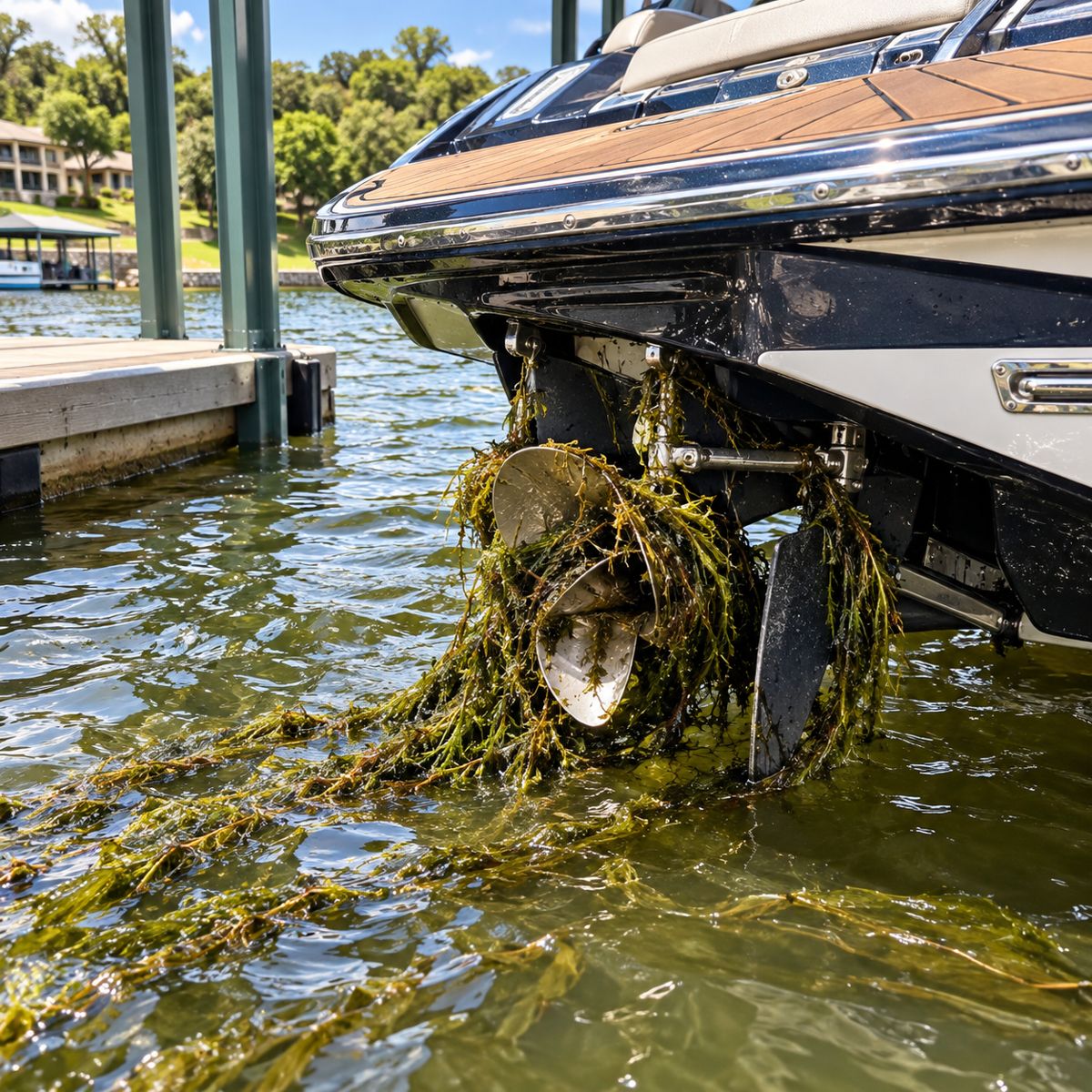
You paid to have the hydrilla cut. Three weeks later it's back at the surface. It isn't bad luck: it's how the plant is built, and how Lake Austin is built.
1. Every fragment can become a new plant
Hydrilla spreads readily from small broken pieces of stem. When it's cut, raked, or chopped up by props and wakes, the loose fragments drift, settle and root. That's why cleanup crews bag and haul fragments away, and why busy boating stretches of the lake re-infest so fast.
2. It stores energy underground
Hydrilla forms tubers, small buds buried in the sediment, that can re-sprout after the top of the plant is gone. Texas Parks and Wildlife has noted that hydrilla may re-sprout from underground tubers when conditions change. Cutting the visible plant does nothing to what's in the mud.
3. Its roots survive what kills the top
The City of Austin points out that hydrilla's root systems survive lake drawdowns and the plant can bounce back within a short time. Anything that only removes the part you can see is a haircut.
4. Lake Austin gives it perfect conditions
Lake Austin is held at a nearly constant level between Mansfield Dam and Tom Miller Dam. That keeps shallow, sunlit shelves along the shoreline, right where docks and swim areas are. Add summer heat, clear water and slow flow during drought, and hydrilla has everything it wants.
What actually stops regrowth in a specific area
To keep a zone clear, you have to take away what the plant needs: light and a place to root. A lake floor barrier does both. It covers the bottom, blocks sunlight, and buries the rooting surface. Clear the existing growth first, haul the fragments away, lay and anchor the barrier, and the plants underneath can't come back up.
Silt still settles on top over time, and a drifting fragment can try to root in it, which is why periodic inspection and cleaning is part of keeping a barrier zone clear.
Free on-site assessment. Chemical-free. TPWD paperwork handled.